
Wayward Reflection (005) The Cost of No Repair ﮩ٨ـﮩﮩ٨ـ♡ﮩ٨ـﮩﮩ٨ـ
Question: How do people who serve with their whole selves survive moral injury and come back with deeper purpose instead of self-destruction?

Greetings, to those who follow me here, and welcome to another reflection piece. This one came after some self-reflection these past weeks during Advent. Feel free to subscribe for free, upgrade to support, or gift support below if a subscription doesn’t make sense for you.
The Cost of No Repair

There is a wound that most organizations never name. Not the dramatic break, but the absence of repair. The ache that comes when the people or systems you trust look away after harm is done. This is the wound of moral injury. The trust that erodes, the meaning that thins, not all at once, but in the silence that follows.
Moral injury differs in many ways.
Moral injury specifically refers to the psychological, emotional, and spiritual aftermath that occurs when a person feels they have violated their moral or ethical beliefs, leading to a sense of betrayal or moral disorientation.
Burnout exhausts energy. While moral injury fractures meaning. Trauma, on the other hand, involves a deeply distressing or disturbing experience that can leave lasting emotional scars.
If you’re wired differently (neurodivergent, highly sensitive, or someone who feels more) these wounds cut deeper. The disconnect between what is noticed and what truly matters lingers and can make you question if you belong. For some people, moral injury echoes long after the moment has passed.
I once coached a young specialist who received an award. On paper, it looked good. Recognition, affirmation, a public signal that someone had noticed. I don’t doubt the intentions behind the award. But something fractured in her anyway. She could feel the gap. She had no words for what she felt. There was a space between what was celebrated and what actually required her effort. What she actually found important.
That gap.
The difference between visible recognition and invisible costs stood out to her. Between who she was and what the system seemed to see. The work she got acknowledged for she didn’t find valuable. She wanted to be recognized for her analytical work, not the “volun-told” event she was put in charge of.
This mismatch in recognition didn’t explode trust.
It eroded trust quietly, almost invisibly.
And when values go unseen, moral injury takes root.
This isn’t rare. Capable people often struggle. Not from lack of resilience, but from noticing what others miss. I’ve seen this pattern repeat for years.
They see inconsistencies early.
They feel misalignment before it has language.
They speak plainly, sometimes before others are ready.
And when they do, the response is often distance. Or discomfort. Or a suggestion that their intensity needs to be managed.
They aren’t wrong. They’re often early.
Systems rarely slow for those who arrive early to the truth. Pattern recognition isn’t just about problems—it serves teammates and protects the mission. Early truth-telling builds shared understanding. But you can’t speak truth to power if power hasn’t seen the problem.
Moral injury isn’t just about feeling bad when your values get crossed. It’s the quiet break that happens when no one notices or cares. Meaning slips away in the silence. The real wound is often the absence of repair—the conversation never had, the hand that didn’t reach back, the apology that stayed unspoken.
This past year, I lived my own version of erosion. Loss. Unraveling. Standing exposed in a place that once felt stable.
The late, incomplete report became a symbol. I trusted the process and leaned on policies meant to hold people through disruption. They failed—not out of malice, but because systems, even well-meant, can’t always carry our weight.
Being told I wasn’t okay, and then being told that reality didn’t quite count, is destabilizing in a way that’s hard to name.
Not anger.
Not ‘perceived’.
Not imaginary.
Not exaggerated.
Named.
This wasn’t about resentment.
It wasn’t about accusation.
It was about naming a fracture without assigning blame.
Moral injury doesn’t stem from animosity or blame. It arises when something trusted for meaning no longer aligns with our core values, and the resulting disconnect is ignored. This silent erosion can be deafening and deeply damaging.
I can say something hurt and still love the people involved. I can name a wrong without needing an enemy. I know this because it’s how I live my life elsewhere.
In marriage. In parenthood. In love.
When my wife does something that wounds me, I don’t stop loving her.
When my children stumble, I don’t withdraw care.
I tell the truth about hurt because the relationship matters.
Moral injury works the same way. It’s not rejection. It’s honesty in the presence of commitment.
Trust seldom vanishes in a single event. It erodes gradually. One missed conversation at a time. One unkept promise at a time. Moral injury isn’t just about what happens to a person. It’s also about what happens, or doesn’t, afterward.
Repair takes presence and ongoing attention, not a checklist or single conversation.
Repair is a shared effort, not just an individual task.
For this specialist, and for like many others, the repair never came. The apology stayed unspoken.
Wayward Soil and Roots
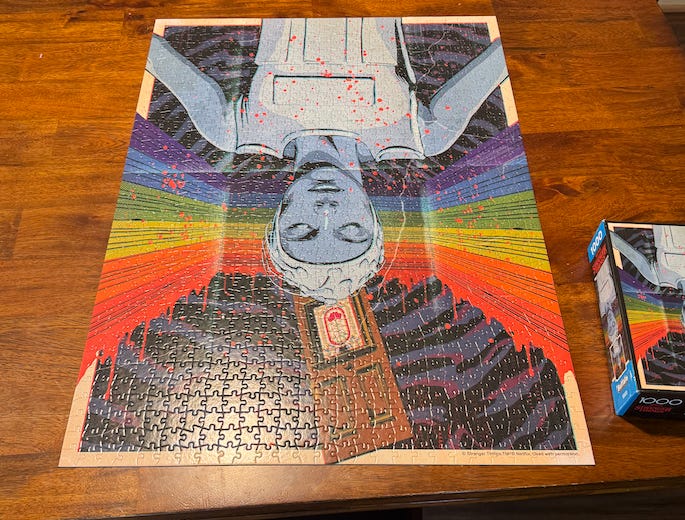
Recently, I’ve found myself sorting thoughts the way you might sort puzzle pieces spread across a kitchen table. Turning them over, trying to see how they fit. My mind has been buzzing, circling back again and again to Matthew 13:21.
“But he has no root and lasts only for a time. When some tribulation or persecution comes because of the word, he immediately falls away.”
— Matthew 13:21 (NABRE)
For most of my life, I heard this verse as a warning. Almost a scoreboard for faith. Stay strong. Hold on tighter. Don’t let go. I pictured that old ‘Hang in There’ cat poster. But this time, I thought about something else as I looked out the glass door into my backyard.
Jesus never blamed the seed. He talked about the soil. About what receives. What resists. What slowly erodes when it isn’t tended.
Sitting there doing the puzzle pictured above with my family, it hit me how much of my story has been shaped not by a lack of faith or effort, but by conditions that made it hard to take root.
My brain is wired differently. ADHD. High sensitivity. A nervous system that rarely powers down. These aren’t abstract labels. They shape how I notice misalignment, how I experience absence, and how long silence lingers in my body.
“The system says I’m doing well, but my soul knows something is off.”
People like us live loud. The mind fills quickly. Thoughts stack on top of each other. Without structure, overwhelm comes fast. It can feel like juggling two hundred browser tabs at once. Each one demanding attention. When boundaries collapse, the body speaks first. A racing heart, tight shoulders, shallow breath. These aren’t weaknesses. They’re signals.
Often, I step back not because I don’t care, but because I feel the warning signs sooner and more intensely. From the outside, it can look like withdrawal. From the inside, it’s survival.
This wiring doesn’t just shape how I think. It shapes how I hold faith, how I make meaning, and how I live inside the space between what others see and what’s actually happening beneath the surface.
When pressure hits (conflict, shame, overwhelm) the system accelerates and slams the brakes at the same time. To others, it can look like shallow soil. Like disengagement. But for me, it’s never been about not caring (even if I say the phrase “I don’t care” out loud). It’s been about not having enough shelter for roots to grow.
I learned this in my own backyard.
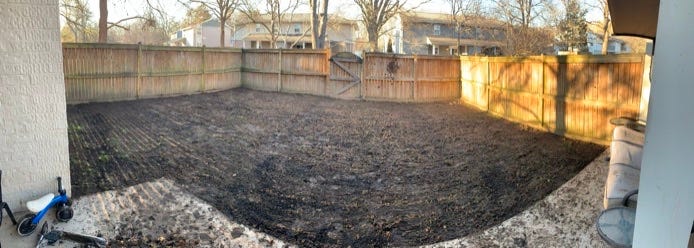
When I moved into my house, the yard was a mess. Compacted soil, bare patches, the residue of years of neglect. I blamed the housing office. I blamed the past tenant’s dogs. I blamed everything but the work itself. But nothing changed until I took responsibility for the ground beneath my feet. I stripped it down. Started over. And even then, it took years. One neglected season and everything unraveled again. Weeds returned. Progress disappeared.
Roots take time. Patience. Care.
Healing does too.
The other day, my wife and I were talking and things grew tense. My system flooded. My mind hit the brakes. I went quiet. Not because I didn’t care, but because I was trying to stay present without drowning. From the outside, it can look like withdrawal. Inside, it’s triage. This can happen everywhere: at home, in meetings, even standing in line at the grocery store.
And this is where moral injury can enter and also take root.
“Trauma isn’t only what happened; it’s also what should have followed.”
We tend to think of trauma as the moment everything broke. The explosion, the betrayal, the loss, the humiliation. Those moments matter. But they aren’t the whole story.
Another kind of wound forms quietly when repair never comes.
When no one returns.
When the conversation never happens.
When we tell ourselves we’ll find someone else instead.
When words are spoken that should never have been.
When apologies are delayed until they disappear.
Some people feel that absence more acutely. Especially those who notice misalignment early, who carry responsibility long after others have moved on.
We don’t always call this trauma. But the body remembers. Trauma isn’t just the event.
It lives in the silence afterward.
In what should have been said.
In what should have been repaired.
In what was acknowledged too late…or not at all.
This is where moral injury takes root. Often not through cruelty, but through neglect. Through speed. Through systems that move on before hearts catch up.
“Moral injury is often the tax paid by those who feel responsibility before authority does.”
And yet, just like my backyard, nothing here is beyond restoration. With time. With patience. With presence.
Repair is slow work. But it is possible.
And maybe that’s the invitation of this season going forward for me. Not to cling harder, but to tend more faithfully. Not to perform strength, but to cultivate depth. Not to judge the soil, but to care for it.
Who knew doing a puzzle with the family would give me this insight.
The Question for 2026
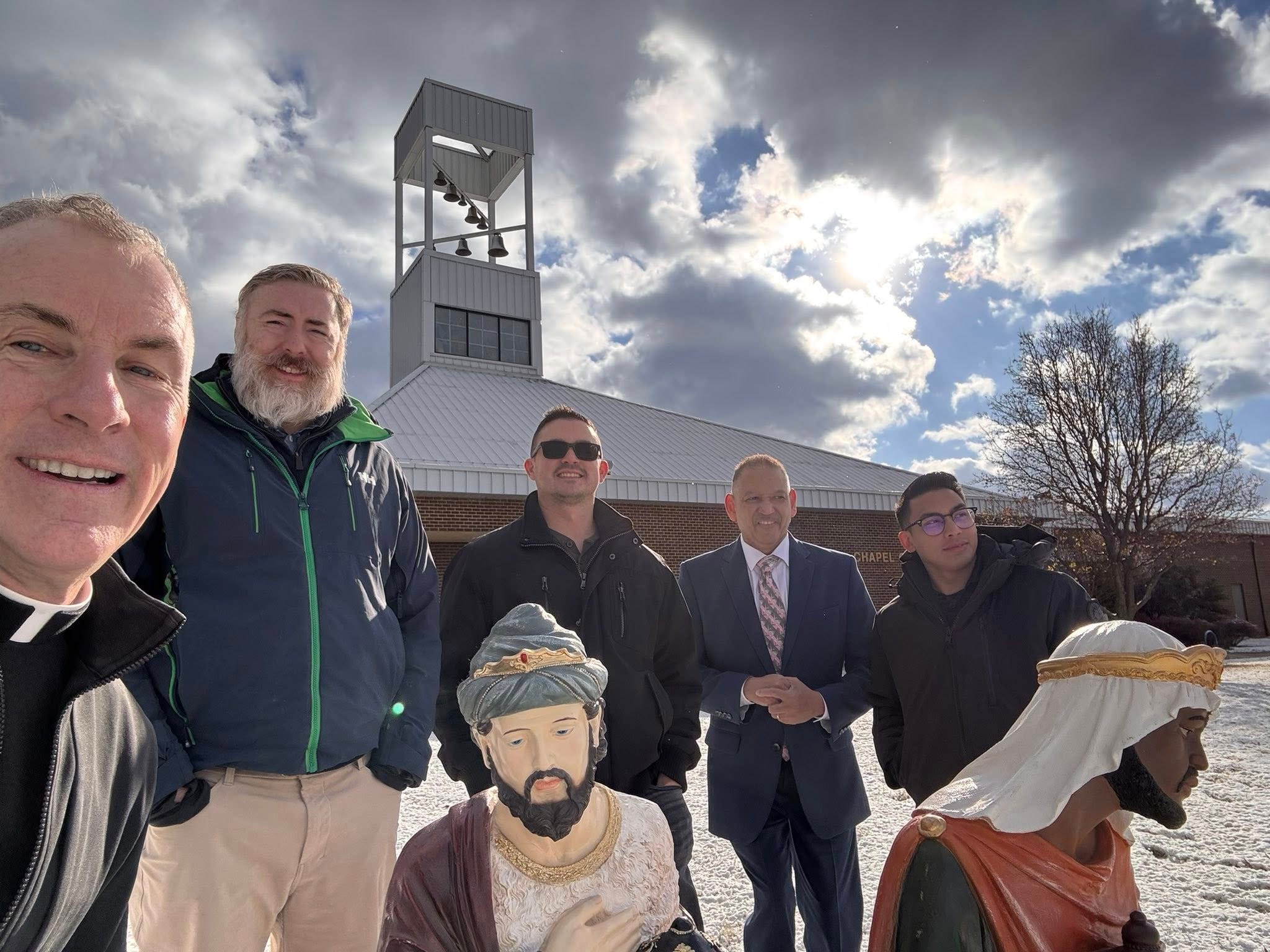
This Advent, I kept returning to the idea that repair requires presence. And presence requires slowing down enough to stay. And that is a lot easier to say than do. Urgency crowds it out. Busyness fills every available space. The innkeeper who turned Mary away wasn’t cruel. He was full. At capacity. I see myself there more often than I want to admit.
Not unwilling.
Just crowded.
Crowded by noise, responsibility, expectation. But when there’s no room left for presence; moral injury accumulates and makes it where there is no space for repair. Repair is rarely dramatic. It can look like listening longer than is comfortable. Like refusing the quiet sin of omission. Real people. Doing real things. Choosing to stay.
That’s where trauma begins to loosen its grip. That’s where loneliness loses its authority. That’s where moral injury begins to turn toward moral repair. That’s where love becomes more than an idea. Moral injury rarely comes from violence alone. It festers in neglect.
This is the work we’re trying to do here at Wayward Purpose. Moral injury isn’t a diagnosis. We are not looking to offer answers, but to cultivate attention.
A way of seeing.
A way of staying.
A mindset.
One unresolved question has quietly guided everything we’ve been building. A question beneath the words. Beneath the work. A fault line running under Wayward Purpose itself:
“How do people who serve with their whole selves survive moral injury and come back with deeper purpose instead of self-destruction?”
Moral Injury provides us with a name for the fracture between who we believed ourself to be and the moment that tested us. Between our values and what we were asked to carry. Between conscience and consequence.
Moral leadership begins when someone refuses to let that fracture harden into bitterness or self-erasure.
It often starts small.
With a pause before responding to an email.
With choosing to see the human on the other side of the screen.
With a few quiet minutes of writing.
With a journal entry to name what’s real and reclaim agency from the noise.
Not productivity.
Not performance.
Presence.
Quick side note:
Stubbed toe + people + daily events + the universe hates me = diary.
What happened + how you felt + growth + reflection = journaling.
Diary vents. Journal transforms.
Moral injury deepens in isolation. Especially when there’s no space for acknowledgment, repair, or shared meaning (this is why journaling helps). Shame grows best in the dark. Discipline, on the other hand, holds the ground together. Not shame-based toughness or emotional adrenaline, but quiet, repeatable practices you can return to when motivation fades. Ways of living that keep the soil from eroding again.

Lately, I’ve been noticing something else.
What if the sharp edges we feel toward others, the irritation, the urge to correct, the discomfort, are invitations inward first? What if what we often call judgment is really unfinished work asking for our attention?
I’ve learned that growth rarely begins with fixing others. It begins with tending what still aches in us. With doing the quiet, unglamorous work of turning toward our own lives (our own backyards first). Of looking out the window, naming what’s neglected, and choosing to care for it anyway.
That kind of peace requires surrender. Not passivity, but the courage to stop resisting what’s already asking for care. To choose faith, direction, and discipline when it would be easier to numb out or turn away; to close the blinds and ignore it. To make an excuse that you will get to it later.
Forgiveness, I’m learning, isn’t naïve. It’s disciplined as well. It’s the decision to stop carrying what no longer gives life. And healing, real healing, doesn’t happen in isolation. It happens in witness. In shared presence. In being seen without being reduced.
This is where loneliness begins to matter.
Loneliness doesn’t end with more content or better ideas. It doesn’t disappear with productivity or self-improvement. It ends when people choose to stand in the gap together. When someone stays long enough for repair to begin.
And when that doesn’t happen, when connection keeps failing, when repair never comes, when people are left to carry their pain alone, something dangerous starts to form. Not suddenly, not dramatically. Quietly.
People don’t choose self-destruction because they want to die.
That’s the part we don’t talk about enough.
That’s why community matters.
That’s why faith matters.
That’s why direction matters.
That’s why discipline matters.
That’s why Wayward Purpose exists.
“We exist to help change the mindset so we can make suicide never feels like an option at all.”
If you’ve given until you’re empty.
If you’ve been functioning instead of living.
If quiet thoughts of escape have started to whisper.
You’re not broken.
You don’t heal all at once.
You don’t rebuild overnight.
You start with what’s in your hands.
You tend the soil you have.
Moral injury isn’t something to “get over.”
It’s something to carry wisely.
We’re not offering answers. We’re offering companionship. A way back to God, to yourself, to others. A way to turn moral injury into moral leadership.
Peace doesn’t come from force. It comes from presence. From witness. From repair. Offered slowly, and received in time.
And maybe, just maybe, the work isn’t about fixing the soil at all, but learning how to tend it all together.
If you’d like to keep walking with us, you’re welcome to subscribe and receive future reflections. Everything we create here will remain free and open. If you feel moved to support the work more directly, you can do so in whatever way feels right to you. There’s space for that below if you want to click the button to gift support if a subscription here doesn’t make sense for you.
We also invite you into conversation. Share your reflections, questions, or stories if you feel called. This work was never meant to be done alone. Community grows when people bring their lived experience into the light, and your voice matters here.
There’s no pressure. This work isn’t driven by numbers or outcomes. It’s driven by a commitment to stay present, to stay honest, and to keep tending what matters focused on the one question above.
We’ll keep going either way. If you feel led to walk alongside us, the door is open.
Thank you for being part of this first season with us here at Wayward Purpose. As we step into 2026, we’re choosing curiosity over certainty, presence over performance, and care over speed. We’ll be here when you’re ready to keep walking together.
Please feel free to share with anyone you think any of this can help.
Wishing you a joyful New Year, see you all in 2026, and as always my ‘Cat Tax’ is below.
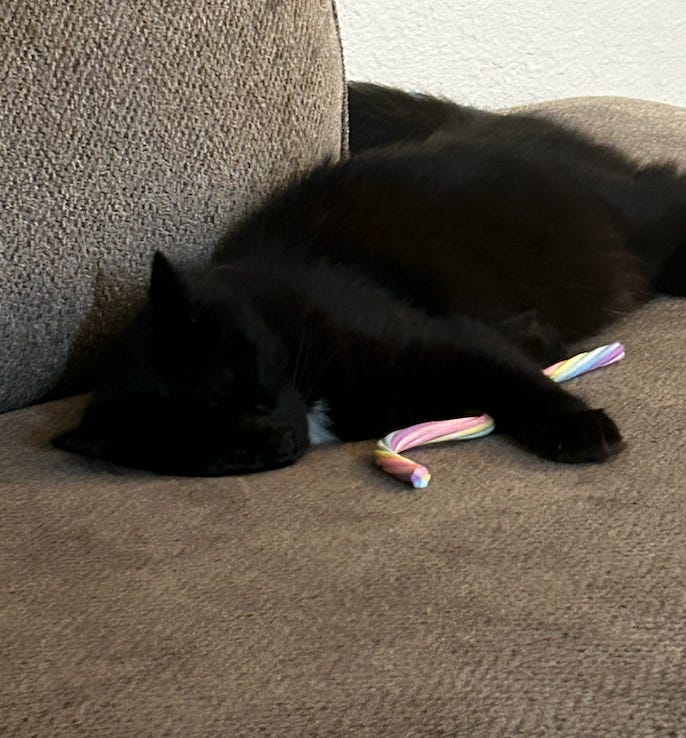
“Don’t live the same year 75 times and call it a life.”
— Robin Sharma