
Wayward Mind
A Personal Story About Finding the Way Back From Moral Injury

Welcome to the first issue of Wayward Purpose. This is a personal essay, raw yet refined, sharing a journey with a clear goal: empowering struggling service members, veterans, and anyone feeling lost by transforming moral injuries into purposeful, morally driven lives. Our straightforward mission is to help shift mindsets so that suicide never becomes an option. Wayward Purpose was born from pain and confusion, aiming to bring clarity from chaos, not just as a brand or feel-good movement, but as a rallying cry. Here, faith, discipline, and direction aren’t just words; they’re tools we lean on in hard times. This space is for anyone who’s given everything to a mission yet feels empty or unseen. We can’t do this alone. If you relate to or know someone struggling, feel free to share this piece.
Note: The views expressed here are solely those of the author, and those of Wayward Purpose. They do not represent the views of the U.S. Government, the Department of War, or any military branch.
Content Warning: Suicide. This article contains a discussion of suicide. If you or someone you know is in crisis, especially if you are an active-duty service member or veteran, please reach out immediately. Call the Veterans/Military Crisis Line by dialing 988, then press 1, contact your local emergency number, or connect with care by clicking this link. Multiple avenues offer a way to find solace and support. Choose the one that feels safest and most accessible for you.
The Weight of the Wayward Mind
Picture this: the air in your lungs turns thin, the world shrinks to a pinpoint, and your own hands tremble at the edge. The room is silent except for your heartbeat and the questions that won’t rest. I write because I’ve stood on that precipice, felt the ache in my chest, the cold sweat, the desperate bargaining with God or the ceiling. Yet, in that very silence, imagine the warmth of a sunbeam falling across your face, or the calming weight of a trusted friend’s hand on your shoulder. It is these glimpses of hope and joy, those brief moments of safety, that remind us something fierce and fragile can grow in the darkness. This isn’t a call for pity. It’s a hand reaching out, a lifeline knotted from faith, discipline, and direction, because when we lead with what’s broken, suicide loses its grip. If you’re here, you’re not alone. The last thing the world needs is more noise. I’m not here to offer shallow inspiration or surface-level motivation. This journey is about transformation. It’s about discipline and choosing the hard path.
The mind turns on itself in the dark. I kept journals filled with silent agony, each page a confession I never spoke aloud. I was labeled too intense, too restless, until the same passion they once praised became a problem to fix. The military called me a firebrand, then a disruptor, then a narcissist. I learned to shrink, folding in my wildness, doing everything right just to survive. Pride was the only armor I had left. Shame seeped in like cold air. Every breath felt borrowed. That’s what moral injury is: the slow erosion of self, the hush of dread just beneath your ribs.
When you hear “wayward,” you might picture someone lost, rebellious, or wandering. Now, picture this instead: headlights sweeping over back roads, a compass needle spinning wild, the old ache in your chest that says you don’t belong. I spent years believing my waywardness was a flaw to fix or hide, trying to shrink myself down, make my edges softer, my voice quieter. But what if wayward isn’t failure, but a secret map? What if it’s a talent for strategic improvisation, the skill to adapt in chaos, or an ability to hyper-focus when the world demands your attention? These traits, once viewed as personal defeats, can be transformative tools that lead you home, guiding you on paths you never considered possible.
I’ve rewritten this story so many times that the pages feel thin. Every draft peels off another mask: the skeptic laughing at faith, the stoic service member pretending trauma was for someone else, the smiling father in family photos. Maybe I was all of them. Perhaps I was none. This, right here, is the last mask coming off. It’s not a lesson, it’s a lifeline: you can come back from the edge, even when the edge has teeth. This story is unfinished, and so am I. If you’ve ever worn a mask so long your own skin feels foreign, step closer. Look in the mirror with me. Let’s see what’s underneath, together.
Now, take a moment. What mask are you wearing right now? Jot it down. Let’s transform this confession into a shared journey of unmasking.
Masks, Family, and the Search for Stability
There are a hundred places I could start, but I’ll begin here. Let me bring you into a scene, like dropping you in like the little Google Meeple into ‘street view’. A battered board, six feet tall, lies against the wall in my hallway, marked with pencil scars from years of moves and storms. Each kid's height and each pet's length are measured. One autumn afternoon, golden light streaming through the window, my son leaned his back against it. A new school year, a new line etched. Each child is taking their turn.
The sound of graphite on wood, or the smell of a potent Sharpie pen, a quiet pride in each of their eyes. A moment suspended between chaos and calm. That board isn't a trophy. It’s a record of survival. As a kid myself, who judged his worth by borrowed doorframes and lived out of a traveling trunk, I am proof that a scattered life can still take root, leave a mark, and keep a family together. Even the lost can create something enduring.
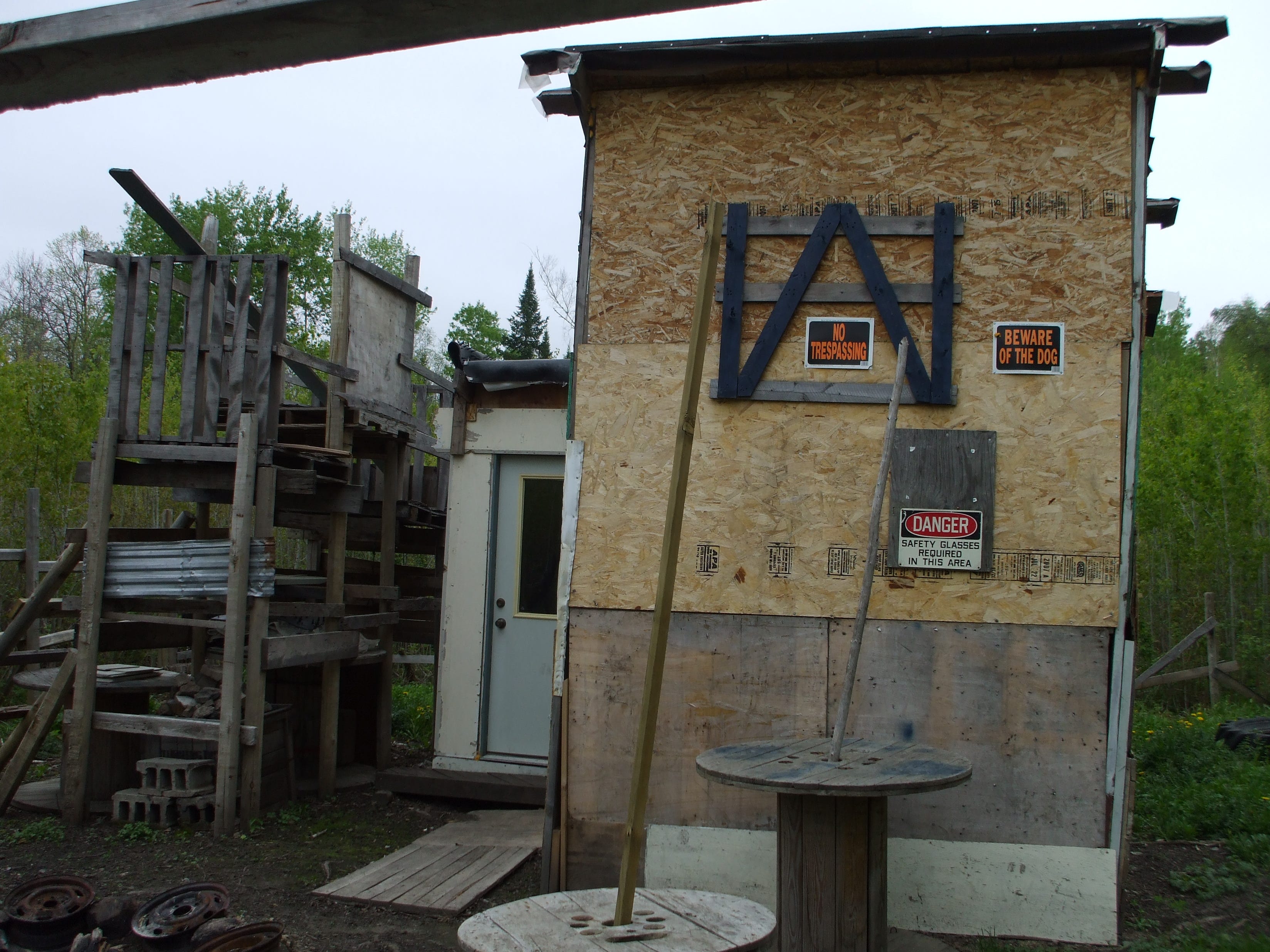
I never had a wall or board like that. My childhood was a series of addresses, trailers, borrowed couches, and a shack in the woods I built as a teenager. Sometimes I measured my height on a friend’s doorframe, knowing I’d be gone before the next mark was made. My life fit in a battered trunk I only unpacked for good about two weeks ago. A trunk my mother bought during troubled teenage years. Maybe that’s why that board matters. It’s not polished, but it’s ours. A fixed point in a spinning world. Every time I pass it, I remember: even the most wayward journeys have markers. Even the lost deserve something that endures.
To my children, if you ever read this, know I’m sorry. When our world cracked this past year, I discovered that you used your birthday wishes to help glue us back together. You did not deserve the trauma of this past year. You always deserve a safe place and a father who shows up in the best way he knows how. I lost myself in shame, loss, guilt, and self-betrayal, drifting through days like a ghost in our own home. But through the darkness, faith was the stubborn ember that wouldn’t die. God and a ragtag church community held me up when the military doubted I was worth the effort. I screamed into the void, let the world warp my pain, but I’m still here. I’m still your dad. I’m not done trying.
If you’re mending something broken in your life, let the ones you love hear you say, ‘I’m still here, and I’m listening.’ It can be the first step to healing together.
I write to drag pain into the light, to prove that resilience isn’t spotless. It’s moving forward with your scars showing. This story is for my family, for anyone wrestling with doubt in the night. Suffering can ferment into growth and into meaning, if we let it. Wayward Purpose is the place where hardship becomes the ground we stand on, not the chain that holds us back.
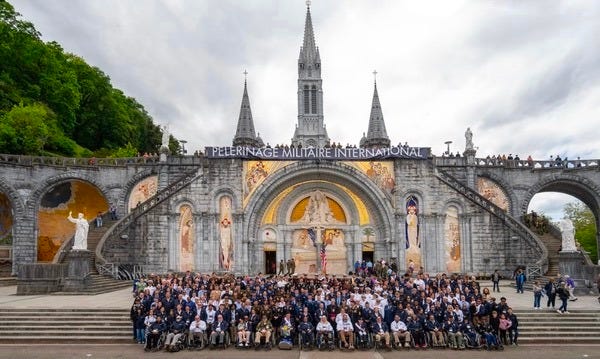
Some nights, memory returns as a scent before it becomes a thought. A certain cold in the air, incense curling upward, the hush of thousands moving as one. Lourdes was like that. My wife and I joined a river of strangers, all of us limping toward something like healing, Ave Maria threading every language into a single song. In that current, my why started to shift. The pain wasn’t just mine to ease anymore. Maybe the point of survival is to reach back and help someone else out of the water.
Surviving Moral Injury in Uniform and at Home
Before purpose found me, I drifted through days as a ghost in a borrowed shell. The uniform became a second skin, the rank a mask I wore so I didn’t have to look in the mirror. I told myself, and still believe to this day, that I was defending something noble, the country, the Constitution, the dreams of people I’d never meet. But too many came home with the body intact and the soul already gone. I’m grateful that I still wear the cloth of our nation, but I know the cost—and I am doing the healing now.
I know what it means to be haunted by the things you can’t take off at night.

Early in my career, I traded the hands-on clatter of loading bombs for the cold, analytical weight of analyzing where those bombs would fall. I embraced my new life as a ‘non-er’. There’s a mission I’ll never forget. We drew the lines, briefed the sortie, and watched as collateral events happened, not in the plan, but on the ground nonetheless. The images in the debrief weren’t just pixels. That was the day I stopped being able to wall myself off from the ‘consequences of consciousness.’ Wayward Purpose’s simple definition of moral injury.
Knowledge became a burden heavier than any rucksack. I carried home ghosts: invisible wounds that tainted quiet moments at the dinner table, in the car, in bed. In my early twenties, I drowned them with work, noise, and the bottom of a bottle, always surrounded by others pretending just as hard.
I called myself an atheist, clinging to cynicism like armor. I tried to build a life on supporting others; when that cracked, I built it on their approval. When that failed, I hid in the uniform. I mistook work for worth, chasing meaning in faiths, philosophies, bravado, even secret societies, anything to fill the hollow ache. Praise couldn’t replace purpose. The system turned meaning into metrics, and I measured myself by empty checklists.
I had no idea how to counter this ‘metrics over meaning’ trap at the time. Home wasn’t a sanctuary either. I was a husband in name only, shame and trauma running through everything like a live wire. Each dropped ball became proof I was broken. Shame was armor, but it was also a prison. One I built, one I locked from the inside. There were nights the house was so silent I could hear the hum of the refrigerator and the ache in my bones.
I withdrew from everyone. My wife, kids, and friends. Days blurred, nights stretched thin as razor wire, each one a silent interrogation:
Does any of this matter?
I never crossed the line, but I stood at the edge enough to understand why the abyss calls. Everyone has a private scale between ‘I’m okay’ and ‘I can’t go on.’ Mine tipped toward the void far too long. Maybe it was stubbornness, maybe grace, maybe just the memory of those already lost that kept me from falling.
Breaking and Rebuilding Family, Trauma, and Grace
Those years were a montage of near-misses and miracles. I can still taste the hospital air, sprinting down sterile hallways as my wife and firstborn teetered between here and gone. My father vanished when I needed him most. I whispered desperate vows to a God I barely believed in. I’ve pulled each of my four kids back from the brink at least once. Death was a shadow at the breakfast table, trauma the uninvited guest, smirking across the table from me. For too long, I convinced myself I could muscle through alone.
Maybe God saw the heart, even when my care was clumsy and wrong. I had to hit rock bottom more than once before surrender. One afternoon, bouncing on a backyard trampoline with my kids, my lungs seized. The price of eight years of smoking, trading health for the grind. I’d mortgaged my body for a career, always promising I’d pay it back later. I almost missed the point of it all, right there, gasping for air while my kids watched.
In that wordless pause, lungs burning, kids silent, a stillness settled in. Not peace, but the kind of silence that forces you to listen to what you’ve been running from.
I did everything I could to help people I’d never met, and lost track of who I was. In that gasp for air, a memory hit me: begging my own mother to jump, watching her laughter turn to an asthma attack, joy draining as she fought for breath. The moment and the memory twisted together into a single challenge:
If I don’t take responsibility for my healing, who will?
If I keep waiting for the right time, when will it come?
Healing wasn’t just about me anymore. It was for the little ones looking up at me, and for anyone else fighting the same invisible battles.
As a young child and teenager passed between feuding parents, I wrote that life was a ‘sinister ecstasy.’ I was more of a child support check than a child. Systems do that too. They reduce people to pieces, functions, transactions. Maybe that’s why the military fit me, in a twisted way: the rules were clear, even if nothing else was. Therapy has helped with a lot.
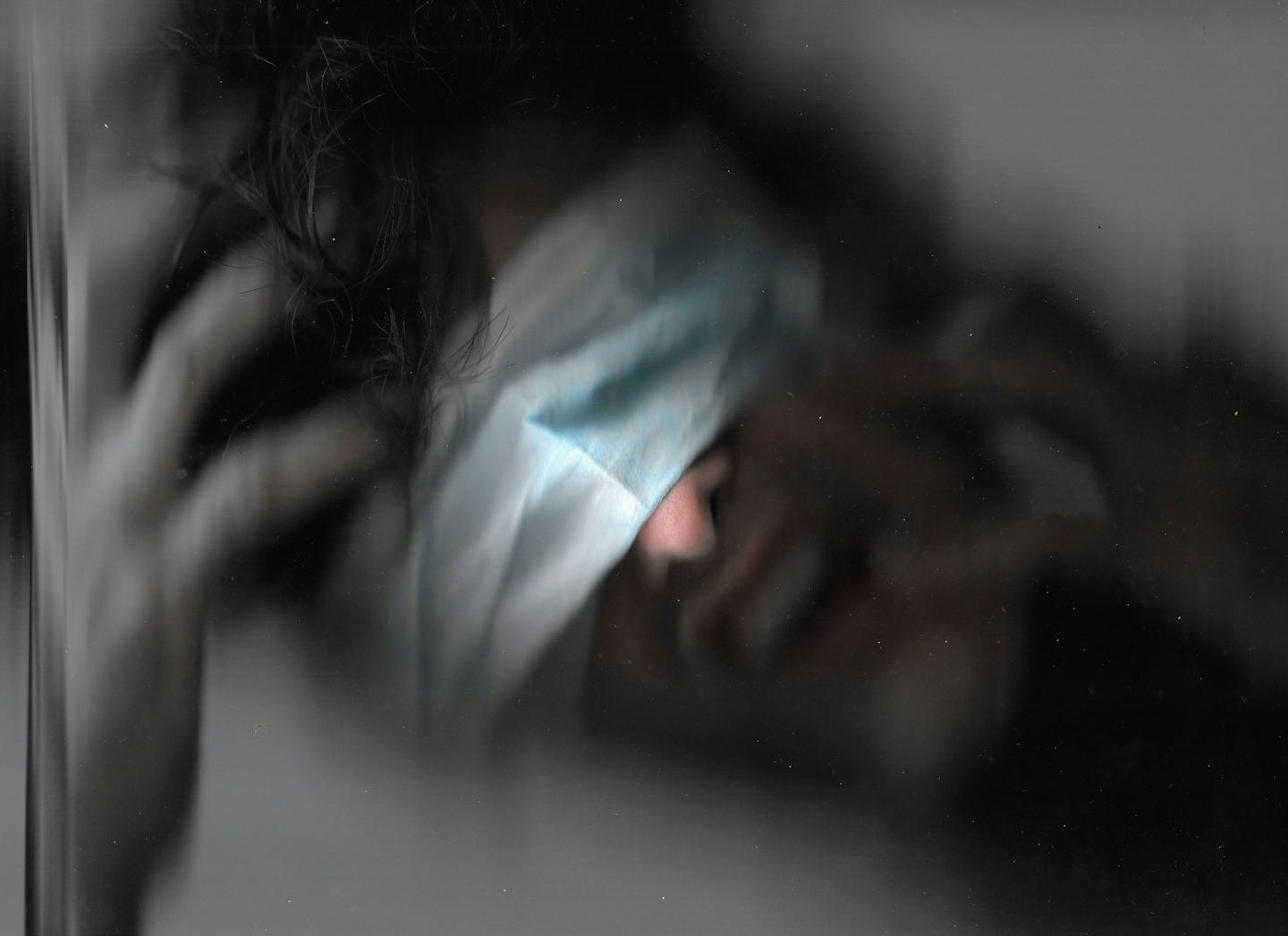
My wife and I collided in the middle of chaos more times than I want to admit: two undiagnosed ADHD hearts, both wearing more masks than faces, somehow stumbling into marriage and parenthood. Our early years were a tangle of military drama and ridiculous romance. I once tried to convince my then-girlfriend, now wife, to steal a candle from a restaurant so we’d never forget the night on our first date. She still teases me for mistaking shredded carrots for cheese at a Greek restaurant to this day. By our third date, I’d already claimed her as mine like some caveman shouting at the tribe. We’ve almost lost each other three times since. Each time, we fought our way back from the edge.
Leadership, Silence, and Presence
Military life taught me as much from failure as from leadership. The lesson that haunts me: silence isn’t restraint, it’s consent. In marriage or a unit, silence leaves someone swinging. Exposed, waiting for a conviction that never comes. Leadership isn’t posture; it’s presence. And the pain from slow emotional withdrawal is worse than cheating.
Now, every morning, I ask God, ‘What do you need from me today?’
It’s not just a ritual. It’s how I show up after everything I have gone through. God put rescuers in my path, and now my purpose and mission are to be that kind of presence for others.
I didn’t come to faith easily. For years, I wore atheism like a badge. My theology was a joke about soda and twenty-three flavors, none quite right. But life has a way of burning away half-answers. Trauma stacked on trauma. Moral injury. Marital collapse. The slow-motion suicide of someone you love. Eventually, I prayed. Not because I believed, but because there was nowhere else left to go. Sometimes faith is what’s left when the lights go out and you’re still breathing.
My mom’s death sealed that turn. Hers was a slow, messy leaving. The sum of wounds carried too long. Self-inflicted suicide by another name. That kind of loss breaks you in places you didn’t know could break. (And if you’re an organ donor, tell your family; I wasn’t given the chance to say goodbye the way I needed to.) My battlefield wasn’t mud, but fluorescent rooms, research, and the pressure to keep the hard truths quiet. I still serve. But I know the cost of silence on the job, and in faith. The dissonance still echoes. Moral injury accumulation is on par with death by a thousand cuts.
Faith, Loss, and the Long Road Back
There’s a kind of moral injury that comes from what you didn’t do.
Did I do enough?
Did I do it right?
No scars, just gnawing doubt. I watched my parents medicate their pain with bottles, pills, silence, and slow self-destruction. I forgave my father many years ago, even though I haven’t talked to him in years since he sold my and my wife’s jewelry and kept the money. The last trust marble gone. My mother’s decline was slower, but just as deadly. I tried to numb myself, too. It never worked.

I sat by my mother’s hospital bed, talking to her, to God, to the hum of machines. Pulling the plug was the shortest and longest hour of my life. She held on, stubborn, until I left the room. Three squeezes—‘I love you’—but the fourth, her reply, never came. Hours later, driving home, I got the call: she was gone, on her terms. Some wounds don’t heal. You just learn to carry them differently.
Months later, my mom visited me in a dream. Vivid, real, a conversation meant for just us. Around then, Wendy, the woman who raised me when I had no mother around, was dying of cancer. She taught me optimism: the glass is always full, part water, part air. I dropped everything, drove to Tennessee, and watched Star Wars by her hospital bed. There weren’t words. Just presence. Presence is what saves us. Wendy was proof that God exists. I know that in my heart and soul today. I owed her so much, but I never could give her enough time.
Redemption, Relapse, and the Work of Healing
All of this pain collapsed into one moment: stepping off a plane in France, my wife and I joining wounded warriors in Lourdes, searching for healing. We’d been through fire. The counseling, separation, and messy attempts at self-awareness. We had to build a family from scratch. Redemption wasn’t a destination, but something we had to fight for, together. My wife looked at me and said, ‘We’ve tried everything but the spiritual route. Want to try that?’
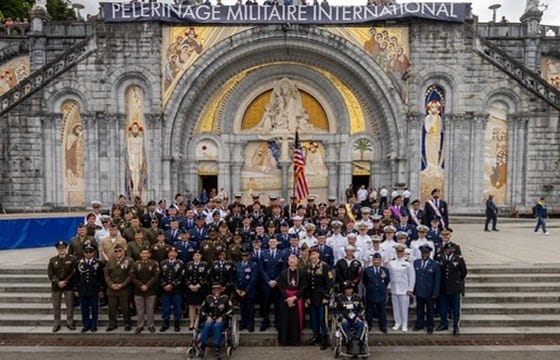
A few heart-to-hearts with a priest, some knee-to-knee and eye-to-eye with the love of my life, and a thousand tears later, the Knights of Columbus flew us to France. I wasn’t Catholic yet. They saw the moral injury in me and knew we needed God more than we knew. Amid candles, crowds, and cold stone, something shifted. I knelt at the grotto in military dress uniform, palm on the wet rock, and felt the weight lift just a little. In a moment of surrender, I prayed; probably fully, for the first time. I asked God for help, for strength, for proof I wasn’t alone.
There was no revelation in Lourdes. No angels appeared, no sudden miracle, no choir descending to lift me out of my despair. Instead, I was there, drenched in cold sweat, kneeling in a stone grotto with baggage at my feet and hope barely alive. It was the moment I held my wife’s hands in the baths and pondered whether all this pain might have some meaning. I swam in glacier-fed water that felt like a punch to the soul, shared a beer with priests and fellow wounded warriors, learned some new jokes, and slept in the tiniest, most cramped room Europe could craft (probably intentionally, to push us pilgrims into community; and if that was the plan, well played). On the flight home, I didn’t erase my pain; I just stored it away. Because ignoring your thoughts and feelings doesn’t work. I tried. You recognize them, let them scar over in their own rough time, and hope the scar tissue holds better than duct tape (not that Red Green will come to the rescue).
Maybe God was always there, but I only started listening when the silence pressed in hard enough to hurt. That was the real beginning: not healing, but the complete surrender. I learned that faith needs to be paired with action. Upon our return, I continued working with my priest and my new faith communities. One small trembling step. The pain didn’t vanish, but I learned to shoulder it differently. I learned that hope is a discipline, not a feeling.
Living with a Wayward Mind
Change rattles the bones. Lourdes was a beginning, but I walked the ridgeline alone. Rebuilding meant therapy, spiritual direction, apologies, forgiveness for others and myself. I studied my neurodivergence like a lab rat, failed forward, prayed into the void. Faith wasn’t a declaration anymore; it became a daily choice. Each morning, I drag myself out of bed and mutter, ‘Fine, God. You win. Again.’ Purpose is a practice, not a place you arrive. To help ground myself and offer guidance to others, I crafted a morning anchor of the Lord's Prayer and a Hail Mary. These simple prayers remind me of my ongoing journey, and I invite you to experience your own transformation, how you see fit. Try incorporating it into your morning or find words that resonate with you.
None of this was tidy. Healing rarely is. Old numbness doesn’t just vanish. I quit smoking, got healthier, stumbled, and got up. The vows I made in Lourdes echoed after, but then we fell harder than ever.
Divorce papers.
Six months of silence.
Six months of pain.
Six months of loss.
Six months of shame.
Six months of guilt.
Six months of trauma.
Six months of minutes and seconds.
Six…lonely…cold…emotionless emotional…months.
Every old wound splitting open at once. We hurt each other with pain we knew too well. I won’t narrate every blow; that story belongs to both of us.
But to my wife: I’m sorry for who I became.
The vacuum of losing you after losing everyone else was unbearable. We became ghosts in our own home, passing in separate rooms, talking only through cold emails. Families took sides, old scars reopened. Through it all, I realized:
I still loved you more than anything in this world.
I don’t ignore what happened. I just know, in my bones, I want you in my life—always and forever.
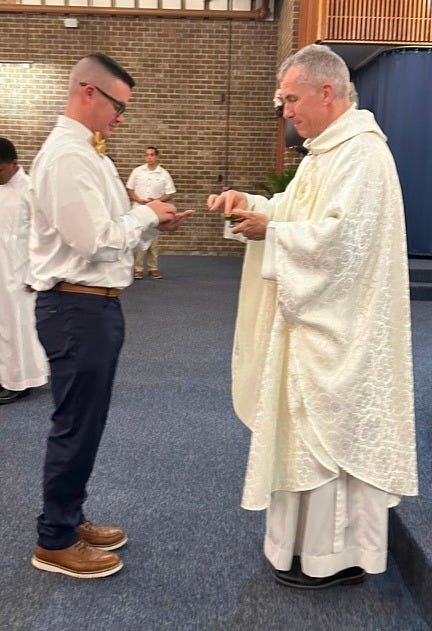
In that void, my OCIA (Order of Christian Initiation of Adults - Catholic Church’s process for adults interested in becoming Catholic, or for baptized Catholics who haven’t yet completed their sacraments) family and fellow faith family, my truth-tellers and safeguards against my own neurodivergence and spirals, became lifelines.
They gave more support than any professional.
More support than anyone in a uniform.
More support than anyone else in my life during this time.
They helped me see my conversion had to be mine alone, not for my wife or kids, but for me and God. Ironically, it was only after the separation that I realized this. If things had been easy, I’d always wonder if I converted to save a marriage, or for some other reason. Instead, I had to reach for God alone.
I no longer believe that ‘not broken’ is the true goal. Telling someone in pain,
‘You’re fine,'
dismisses and erases their experience. Invalidation causes its own kind of pain. Neurodivergent minds like mine aren’t broken; we are simply forced to wear masks in a world designed for others. My task now is to translate my inner storm into language that creates connection instead of just chaos.
I’ve encountered systems and procedures intended to provide care, but instead, they drove a wedge between my wife and me. Fear, anxiety, and anger led others to actions that caused more pain instead of healing. Despite support from a counselor, priest, faith community, and therapy, I remained stuck in a loop of repeated evaluations. Whenever I asked questions or tried to understand, I was labeled as problematic. Frustrated and shouting into the void became my coping mechanism.
During a stress-related, hostile personality test, the clinician’s gaze felt like two judging guns aimed at the back of my head. The results from that command directed test labeled my ADHD as narcissism.
I was told not to be defensive, as if compliance equaled genuine care, but turning care into compliance isn’t real care. I was kept distant from my own case, with no emphasis on self-management; communication was shut down, emotional regulation reduced to a checklist, and my cognitive flexibility scrutinized like I was the main character in The Truman Show. In the end, the twisted logic of these events felt almost darkly comic. A chain of events played out in many therapy sessions now. What was labeled as ‘help and care’ became the main reason I needed help and care.
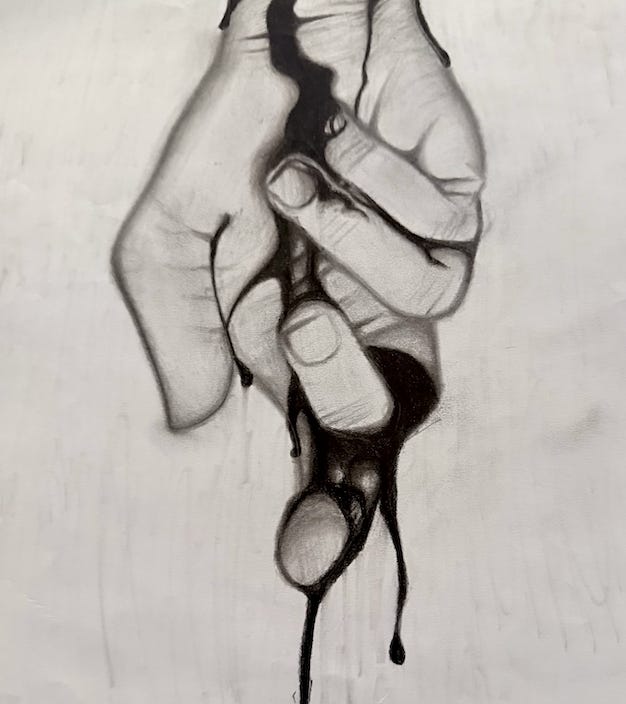
Moral injury doesn’t just live in policies; it lives in us. In a season of depression, my wife drew a piece she still calls unfinished. A figure bleeding from unseen cuts. It mirrored my own journey: trying to help others while bleeding out myself. Her art was confession in lines and shadows; my writing, confession in words.
Sometimes the only way to say we’re not okay is through what leaks out around the mask.
Systems matter, but presence matters more. What changed me were the priests who sat with me in silence when I had no words, the friends who stayed when others left, and a God who met me where I was at. The discipline now is choosing honesty over avoidance, and building spaces where confession meets care, not punishment.
Alfred Adler wrote that the great question eventually shifts from
‘How do I survive?’ to,
‘Who needs what I have to give?’
That turn is harder when systems feel weaponized and paperwork replaces presence. I’ve watched too many fall through the seams. And yet, grace breaks through in silence, in friendship, in the rare moments I wasn’t a problem to fix but simply present: a son, a husband, a service member, healing alongside others with wounds too deep for policy to touch.
Faith, neurodivergence, trauma. None of it lines up neatly. ADHD isn’t a superpower or a curse. It sharpens some edges and cuts others. The only way forward is to grapple with it, harness its energy, and learn how to transform intensity into contribution, impact, and purpose.
I don’t have cures. What I have are stubborn promises to stop letting broken systems decide how we feel; to build sanctuaries where confession brings care, not punishment; to hold faith and grit as lifelines, not loopholes. Maybe wayward doesn’t mean broken. Maybe it means hungry for truth. Purpose happens when we turn that hunger into fuel. Trauma and despair get a vote. So do we. Every day, I cast mine by showing up. By looking another soul in the eye and saying,
“I’ve got seven minutes. Always. I’m here.”
In this journey, I invite you to consider:
Which system is silencing you today?
What process has taken away your ability for self-management?
What is the first step you can take to transform stagnant silence into dynamic action?
Let’s challenge ourselves not only to acknowledge these promises but to ask ourselves how we might start living them.
There’s already too much noise. Slogans about how grit shatters the moment life hits you in the teeth. Inspiration without transformation is cheap fuel. The kind that burns hot, then leaves you cold. One night, bathed in the blue glow of my phone at 2 a.m., I scrolled through highlight reels and perfect lies. It was like drinking from an empty cup; the more I scrolled, the more empty I felt. That hollow ache became my catalyst.
I’m seeking a slower change now. The kind that seeps into the bones, hardening into daily discipline. Social media promised connection but delivered performance. Broadcasting demands attention; true vulnerability offers presence. I used to think that bleeding publicly was courage, doing it more than once. I still carry guilt and shame today, in small doses, from past memories.
A much-needed apology is now being given to my wife in public, during a time when I was broadcasting, mistaking it for a sign of vulnerability. Still, it ultimately hurt her in the wake of my unpolished words, spiraling frustration, and ineffective communication. Although intended to highlight issues within a process and system, it ultimately caused disgrace and humiliation. I carry this guilt and shame, and all I can do is say, I am sorry. Now, I believe that the bravest thing is to show up quietly, offer presence, and hold space for others, even when no one is watching.
Building Purpose Together
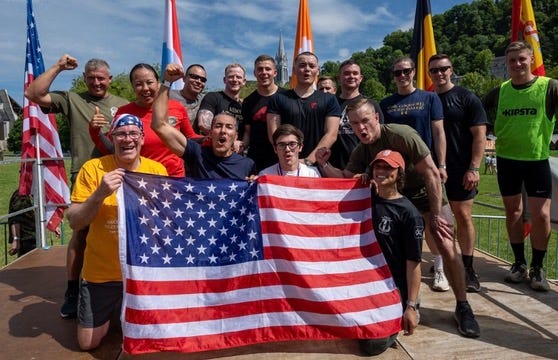
Am I perfect now? Not close. I still stumble daily.
Wayward Purpose is our answer to a world that loses too many to suicide. People in uniform, people in my family, maybe people like you. I’ve watched systems try to fix souls with paperwork, reduce suffering to checklists, and call it care. It doesn’t work. Our mission is to reach the wounded before they reach the edge, to help transform moral injury and shame into fuel for moral leadership and life.
I’ve experienced the system’s response firsthand: checklists, PowerPoints, and prevention efforts often become mere paperwork. People are reduced to functions, but they are not just equipment that can be reset with a signature.
Our work aims to intervene early, preventing situations where someone feels their only escape is to take their own life. We aim to help neurodivergent, faith-driven individuals identify and transform their pain into meaningful impact, contribution, and purpose. So suicide never feels like the only option again. If anything in this story calls to you, take the first step. Please reach out, reply, or share the one struggle you carry today. Let’s walk this road together and make sure no one ever stands at the edge alone. Resiliency becomes stronger when you keep stepping away from the edge.
Why Wayward?
Because our paths were never straight, I wandered, doubled back, and shed mask after mask. Purpose didn’t wait at the end of a neat road. It showed up limping, battered, on the far side of wandering. Now, I’d rather spend what life I have left leaning into my strengths, trusting God, and building with people whose gifts fill the gaps I can’t patch alone.
If the women don’t find you handsome, they should at least find you handy; at least that’s what the Red Green Show taught me as a child.
This Substack is our ‘do one,’ a raw, unfiltered space for questions, scars, and small wins. It’s a window into our messy minds as we build Wayward Purpose, one hard lesson at a time. We hope it will grow into a hub for frameworks, practices, and authentic community. I’m not a guru, therapist, medical professional, or pastor. My only real strength is transforming complex lessons and information into actionable and simple concepts, and sharing them with anyone who needs or wants to learn.
Over the coming months, we’ll explore everything we’ve learned and continue to learn for veterans, the lost, and anyone struggling to lead themselves and others through moral injury, faith, and understanding neurodivergence. We’ll continue to share stories that we think will help this community.
That’s why this belongs here. Wayward Purpose isn’t a polished brand. It’s a gathering place for restless, wandering souls. Service members, veterans, neurodivergent minds, faith-curious seekers who don’t fit the self-help mold. Bring your whole self, even the parts that are hurting, and find company instead of isolation.
If Jesus could sit at tables with outcasts, Wayward Purpose can sit at digital tables with the lost, offering light, presence, and hope where I once walked and kept company.
Any money given here isn’t about monetizing pain. It fuels our vision: to make suicide never the option, and to build what systems can’t. Real connection, coaching, and a community that has the potential to save lives.
I’m not a guide on the mountaintop. I’m in the mud with you. We at Wayward Purpose are all still healing, still learning. Every week, we will bring you the real stuff: hard stories, practical tools, quiet truths. No highlight reels. Just the raw, unfinished work of rebuilding faith, discipline, and direction together.
If this story is yours too, don’t just read, feel free to walk with us. Let’s build this wayward road together and make sure no one walks it alone again as we help transform moral injury into moral leadership.
Changing a culture, especially around suicide and moral injury, takes more than stories or research. These topics are hard to face, and the stigma is real. But acknowledging the wound is the first step in healing. It’s okay to struggle and speak openly, even when it’s uncomfortable. By sharing my journey, failures, and insights, I hope to inspire others to do the same. Change starts with us and grows as we empower each other to lead, restore faith, and find purpose. Wayward Purpose is about turning moral injury into moral leadership. Ensuring despair and suicide never win. This is how we change lives and culture. Together.