Wayward Grief
When "I'm Fine" Becomes a Warning Light

Welcome to the third issue of Wayward Purpose. You’ll notice this isn’t your standard newsletter. I’m writing for the lost, the stubborn, neurodivergent, wayward mind, and anyone who can’t stand one more fluffy think-piece. If anything here lands with you, or you know someone who doesn’t yet have a name for what we share as moral injury, pass it on. The rest? Let’s just get into it.
I am gradually revising and updating these earlier writings. Changing a culture, particularly around issues like suicide and moral injury, requires more than just stories or research. These subjects are difficult to confront, and stigma still exists. However, recognizing the wound is the first step toward healing. It’s okay to struggle and to speak honestly, even when it’s uncomfortable. By sharing my journey, failures, and insights, I hope to motivate others to do the same. True change begins with us and grows as we support each other in leading, restoring faith, and discovering purpose.
Wayward Purpose focuses on transforming moral injury into moral leadership so that suicide is never an option. This is how we transform lives and culture. Together.
Content Warning: Suicide. If you or someone you know is in crisis, especially an active-duty service member or veteran, please reach out immediately. Call the Veterans/Military Crisis Line at 988, then press 1, or contact emergency services.
Masks and Survival
Before the rewrite, this section held scattered journal entries. Raw scenes of hospital breaths, storage units reeking of old smoke, military stoicism, family distance, and the quiet ways I insisted I was “fine.” It was me masking with work, alphabetizing chaos to avoid opening anything that hurt, snapping at dinner because a recipe tasted like childhood, watching my son scoop peas with the backside of a fork and seeing my younger self mouthing off in the backseat of Mom’s car. This was a hard revisit.
It was my wife noticing the way I froze every time my mom’s name came up, or the way I spoke in clipped, “I’m fine” cadences like a CBT checkbox. It was the moment she said, “You’re safe. I’m not going anywhere,” and the truth finally broke through that I wasn’t fine.
I had never walked the halls of this grief. I had only shut the door and braced against it. Those earlier pages were the floodwater behind it, gathering force, waiting for this exact moment: not to drown me, but to make me finally, honestly begin.
I kept saying, “I’m fine.” I said it so many times I almost believed it myself. But really, it was just a mask. Thin and see-through, not convincing anyone, not even me. I did what I thought I should and still felt drained and unraveling. Nobody tells you how to handle this slow unraveling.
So I faked it.
I buried myself in work and small projects, hoping for a sense of control. Ignoring grief is like putting off an oil change: you might get by for a while, but eventually things fall apart. My mind found endless distractions to dodge reality. It made no sense, but dwelling on things other than the ones I compartmentalized was easier than facing my pain. Avoiding the real issue was preferable to admitting I felt overwhelmed by loss I couldn’t name. I tried to reason my way around grief, but eventually, the loss always won.
If you want to take a moment, reflect on your own masks. What projects or distractions do you dive into when you’re really trying to avoid deep pain or grief? It’s easy to say ‘I’m fine,’ but consider what lies beneath that automatic response. Exploring this could be the first step towards healing.

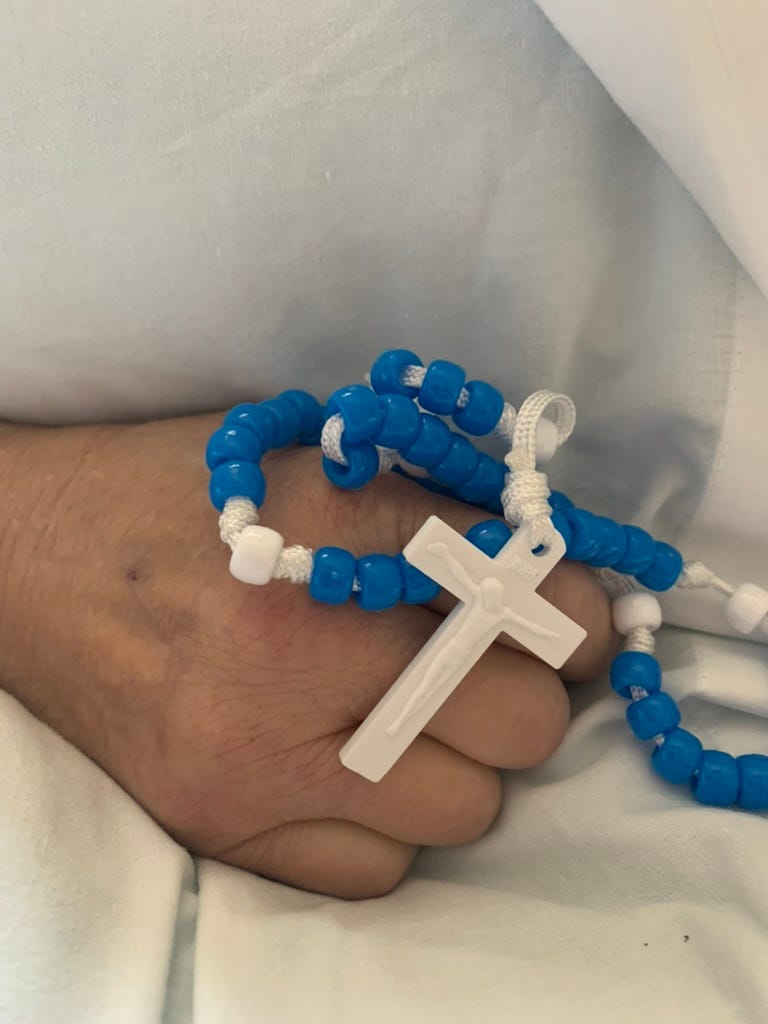
Life has a way of catching up with us, and mine unfolded in a cold hospital OR. I was told her chances of surviving the first 10 minutes after removing her from life support were very slim. Surprisingly, she endured the entire hour I was with her, then almost 24 hours more until I left. I had to step up once again, acting as the adult to compartmentalize everything and holding it together. Watching the person who cared for me more like a parent than a child take her final breaths, I counted each one, as it was all I could do. Her hand in mine. Small squeezes and whispered prayers. Knowing these were the last few moments I would have with my mother on this earth.
She released her hold only after I was already on the road, as if shielding me one last time. No machines were involved. Only her will and love guiding her to the end. I whispered to her, “I love you,” but love couldn’t prevent what happened. Afterwards, I felt nothing instead of everything; I was numb. I should have felt something, but I had nothing left. I compartmentalized so well, refining a military skill, that I carried it into a place it didn’t belong.
Once a strength, now a weakness.
Being taken from my kids this summer for seeking help brought me to my knees, while watching my mother’s slow decline froze me. Images, sounds, conversations, and memories I had hidden away remained locked inside until this week, when I finally stopped to do the hard, painful work of processing this grief.
Clearing out her storage units was almost surreal. Filled with bags of clothes, medication bottles, an ashtray with cigarette butts, and the heavy, unmistakable smell of smoke. I found the suitcase I bought for a trip she never took still packed, sitting in what I can only describe as a crackhouse. The place where she took her last conscious breaths. Leaving everything behind felt like a painful goodbye to her. Children’s presents were hidden in a zippered pocket not meant for me to see. I was overwhelmed with regret, shame, and guilt, wondering if she had called and I had missed it.
I felt something that day, stretching across time and reality. A silent scream into the void in the back of my mind, a question that keeps reopening old wounds. Damn it, Mom…why didn’t you call?
Thorns of Grief
Grief braided itself through everything. Love, regret, anger. Three strands twisted so tightly I couldn’t tell where one ended and the next began. Irony was she was the one who taught me braid.
I stayed stone in the hospital, choosing “nothing” over “everything,” but delayed grief doesn’t disappear; it spiderwebs quietly until the whole windshield shatters.
Sorting through boxes and smoke-soaked memories cracked me open: letters from who my mom once was, trinkets from lives she survived, and the suitcase she never brought home. Faith shifted from something I thought I owned to something I had to practice. Grace humming in the wiring only when I chose to reach for the switch.
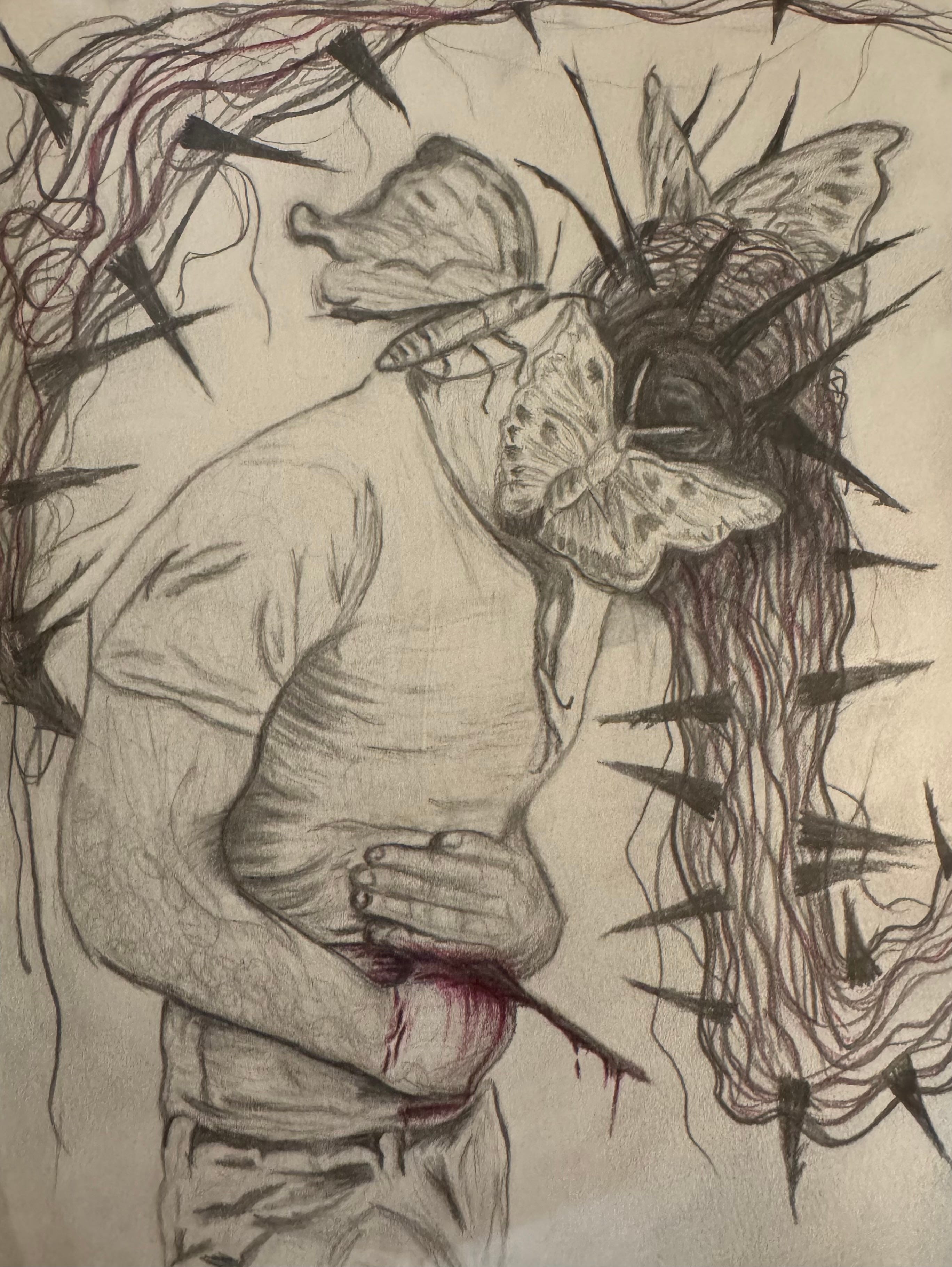
Shortly after writing this week, my wife showed me a drawing she made. She waited until I expressed my pain before revealing it. The picture depicted a figure trapped beneath thorny vines, with butterflies trying to reach a tiny light. She illustrated what I was hiding, not what I said. The thorns symbolized my doubts, shame, and frantic busyness. Each time I worried I wasn’t enough or hid behind busyness, saying “I’m fine” instead of “I’m hurting,” those were the thorns. The butterflies represented hope and love still alive amid the chaos, following the guidance my grandmother always gave. If love is the seed, the thorns are the obstacles that choke it.
The stress, doubt, shame, and distraction; all pretending to be urgent.
Grief limited my perspective. It wasn’t denial but a matter of survival. Psychology terms this as dissociation, while my faith sees it as a long, dark night.
Have you ever dulled your feelings just to get by? Sometimes, reducing sensitivity helps prevent breaking, but we can’t remain in the darkness forever. Eventually, feeling becomes necessary for healing. Like turning on an old, clunky lamp, you must choose to reach for the light. For me, that involved allowing myself to feel pain and recognizing where I was most wounded. Healing isn’t about avoiding pain; it’s about staying with it until you learn from it.
A Latin phrase kept coming to mind I learned in OCIA: ex opere operantis – ‘by the work of the worker.’ I take it to mean that grace is like electricity flowing through wires, with my choices acting as the switch. For years, I hoped for a lightning bolt. A sudden epiphany or quick fix to erase the pain. But the real answer wasn’t a spectacular show; it was much quieter: presence. In my darkest moments, grace appeared not as a miracle but through people who refused to let me fade away.
My wife found me on the garage floor, crying openly on cold concrete, and she didn’t hesitate. She embraced me and said, ‘I’m right here. I’m not leaving.’
A priest sat with me in an empty chapel, reminding me that forgiveness is a door you may need to open repeatedly.
Even at church, a small community kept offering me space, even during weeks I simply stood in the back, arms crossed, overwhelmed with doubt and pain.
These acts were more than gestures. They demonstrated the importance of being present rather than striving for perfection or performance. There were no grand solutions or attempts to ‘fix’ me. Only genuine humans accompanying me in my pain. That’s grace happening in real time. I realized that being a mess and still present is better than being composed and absent and being wrecked and present is always better than being tidy and absent.
To make this actionable in your own life, consider reaching out to someone you trust and simply telling them where you’re at, genuinely. Invite them to share a moment of real connection, whether it’s a walk, a phone call, or a quiet cup of coffee together. No need for grand gestures; sometimes, what helps us most is the company of someone who simply listens.
I wish I could say this realization made everything easier.
It didn’t.
I still catch myself listening for my grandmother’s voice on a phone line that’s gone dead. I still wish Wendy, the family friend who became a second mother when I had no one, could have met my wife and children. Sometimes I breathe in cigarette smoke and let it sting, because even that pain connects me to the happy moments I shared with my mom. Every day, I strive to be the man my mother and Wendy hoped I’d become, the man my wife sees when she looks in the mirror, and the father my kids shout “Dad!” to. The friend who answers the phone at 2 a.m. and says, “No matter what, I got you.”
These promises keep me going.
Grief doesn’t vanish; it just changes shape.
I carry these losses, but I’m learning to carry them with grace.
Presence Over Performance
Before the rewrite, this section held even more tangled memories: signing final forms and asking a priest for rites I didn’t yet understand; childhood moments of grit, like four cavities drilled without Novocain because we couldn’t afford comfort; my mother’s desperate search for love, the men who played games with her heart, and the kid I was. There were ashes instead of a funeral, a uniform instead of mourning, and later a separation from my wife that revealed how grief can warp time, distort vision, and break what was once whole. And yet, my wife and I found our way back. Not through performance, but by holding mirrors and choosing accountability over blame.
Writing all this felt like reliving it. Part of the healing process.
For years, I thought healing meant appearing strong and staying busy. In the military, I was taught to push through crises and delay feelings for later. But grief doesn’t wait; it seeps out through small cracks and eventually breaks everything apart.
No one tells you this.
I couldn’t walk into work claiming I just lost my mother to a slow, self-destructive battle. I tried to seem professional, but pain kept leaking out. I became quieter and more withdrawn. At home, I was physically there but emotionally checked out. My wife later said living with me then felt like coexisting with a ghost.
Eventually, life finally prevented me from avoiding it. One day, I found myself on my knees, overwhelmed by waves of sorrow catching up with me. There was no divine sign, just a breakdown that shattered everything. I understood I couldn’t heal what I refused to acknowledge. So I accepted the harsh truth:
I wasn’t okay, and that was okay.
I began speaking, truly speaking, to my wife, to a counselor, to my priest, and to God through hesitant, angry, frustrated, confusing prayers. I allowed others into the darkest corners of my heart, the ones I had kept locked out of shame.
And I discovered something: when I showed others my pain, they didn’t abandon me. Instead, they moved closer and shared in my suffering, my moral injury, and met me exactly where I was.
My wife didn’t need a strong hero; she needed me to be present and genuine. In our marriage, silence was more harmful than any honest confession. So we began the difficult process of untangling years of unspoken pain. We held up mirrors to each other, not to judge, but to say, “I see you. I’m still here.”
Who holds a mirror for you?
Who do you trust with the parts of yourself that are locked away?
Consider inviting someone you trust into this vulnerable process. Not to fix, but to witness. This act of inviting others can turn the isolation of your struggles into a shared journey toward healing.
During this past few seasons, love evolved from mere feeling or performance into a deliberate choice. It meant showing up even when I felt unworthy or unable, placing accountability above appearances. I remember telling my wife about my deep despair. I expected anger or disappointment, but she just squeezed my hand and appreciated my perseverance.

That moment taught me that authentic presence is more powerful than superficial appearances.
Being genuine might cost pride, and you can’t control how others respond, but it can save your life. Over time, we rebuilt trust. We are still rebuilding trust. We almost drifted apart during the storm. At one point, even separating, two soulmates lost in grief and years of moral injury, but vulnerability became the lifeline that saved us. We committed to fighting through, wounds and all.
I also learned a painful lesson about misdirected pain.
When I was hurting,
I started blaming the easiest target,
sometimes even the person trying to help me.
I was angry at the systems that failed my family and I, and in that anger, I unfairly saw my wife as part of the problem.
While trying to explain how broken institutions wrongly label and mistreat struggling people, I mistakenly viewed her as an opponent instead of my strongest supporter. That was wrong. I didn’t mean to hurt her, but good intentions don’t erase the impact.
Here’s the truth: I failed her in that way.
I distorted her image in my confusion and pain, broadcasted and called it vulnerability, and it wasn’t fair. She didn’t deserve that. So I’ll say honestly, as I’ve told her directly: I’m sorry.
She showed me grace I hadn’t earned, and I promise to honor that every day. This experience has shown me that sharing my story comes with responsibility.
I must aim to heal, not to hurt.
Growth is about owning the past, understanding how I arrived here, and doing the work to improve. I owe that to those who love me.
Whether within a family or a team, treating a hurting person as just a problem to be fixed causes a loss of something essential, and often leads to betrayal and moral injury.
I’ve observed how larger systems tend to respond to pain with procedures and checklists, as if a distressed soul can be filed away.
I’ve seen institutions reduce individuals to mere numbers and label it “care.”
Productivity without compassion becomes nothing more than efficient cruelty. People don’t truly heal in such environments; they just learn to hide their pain better.
For years, I hid behind saying “I’m fine” because I believed strength meant silently handling everything. Now I realize that true strength is about letting others in.
This belief drives my dedication to what we are building here at Wayward Purpose. A community founded on the idea that no one who has given so much should feel alone in their darkest moments. We are creating a framework that values presence over performance or expectations. It’s a space rooted in faith and honesty, not hype, where we can admit we’re not okay and take the slow, healing steps.
Disconnection can’t be fixed by fancy platforms or policies; it’s healed by showing up, the imperfect human, to each other, especially in the moments that matter most.
Wounds into Leadership
The term moral injury entered my vocabulary nearly three years ago. I didn’t know the name for it while it was building inside me, but I understood the feeling. It’s that deep ache in the soul caused by betraying or being betrayed in your core values. For me, it was a mix of both. Years of service left me carrying burdens I never fully processed. Times I felt complicit in a system’s wrongdoing, instances where trusted leaders violated what’s right, and moments I let down people depending on me because I was stretched too thin or too broken myself.
These wounds are invisible on an X-ray, but they cut deeply. I tried to numb that pain as I did with others, by overworking, cynicism, and keeping a stiff upper lip. However, moral injury festered, intertwined with my grief. Losing both my mothers, losing faith in some leaders, and losing my relationship with my wife, while also subjecting my kids to experiences they shouldn’t have faced, almost broke me.
It felt as if I mourned not only the deaths but also the loss of my identity and my beliefs about the world, all at once, and in the most unforeseen place, I began to heal.
Moral injury started to turn into moral leadership for me over these past few years. I returned with a seed of determination planted in all that scarred-over ground: I would not let my pain be pointless. If I couldn’t change the past, I could at least use it to illuminate a better path forward for myself, for my family, for anyone I might lead or influence.
In these moments, I recognized versions of myself, strong outwardly but secretly bleeding inside. I wondered:
Could my honesty prevent someone else from self-destruction?
What if my purpose now is to be the leader I once needed?
Could I be someone who leads with vulnerability and trust, unafraid to say, ‘I’ve been in the dark valley, let’s walk out together.’
This encapsulates my idea of moral leadership: transforming personal pain, personal moral injury, into energy for serving and inspiring others.
Leadership that emerges not despite wounds, but because of them. To help others access this transformation, I developed a seven-step framework to guide anyone aiming to lead through their wounds. I am still refining it, but I vividly remember the moment I first truly acknowledged my pain, and I am working to release the framework in 2026.
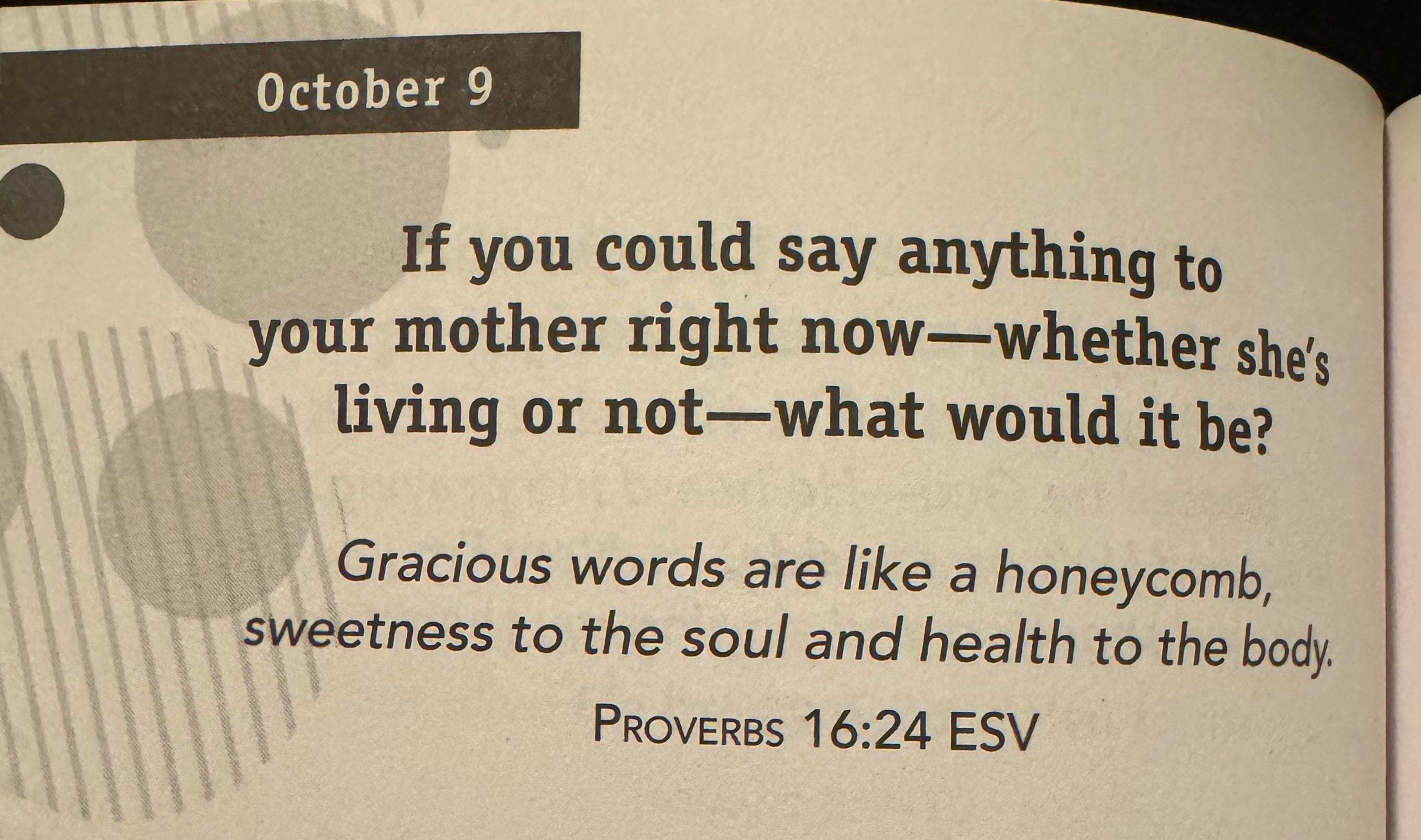
Around this time, when I was writing this essay, I was starting to recover from my grief, and life threw another curveball. A small book on my shelf caught my eye one exhausted morning. A daily reflections journal I had forgotten about. I flipped it open to that day’s date, and the prompt on the page stopped me cold.
It asked: “If you could say anything to your mother right now – whether she’s living or not – what would it be?”
I stared at that question until the words blurred. It was as if the universe, God, or my own subconscious was daring me to finally have the conversation I had been avoiding that led to this article here.
There were so many things I wanted to tell my mom.
That I was angry she left the way she did
That I was sorry if I ever made her feel alone
That despite everything, I loved her and always will.
The fact that I would never hear her answer felt like a punch to the gut after writing all of this. But that question also seemed like a door cracking open.
An invitation to start participating in my own healing instead of waiting for it to happen magically. It was a beginning, not an end. I knew the real work was just beginning, and it was mine to do.

Faith and Framework
I learned in therapy that healing wouldn’t drop from above. I had to take the steps myself. Hope became a discipline, not a feeling. After finally admitting I needed guidance, I began practicing a few simple habits my counselor and mentors recommended.
Understand and Feel: I started naming what I’d lost instead of hiding behind “I’m fine.” I listed the people, opportunities, and pieces of myself I’d buried and let myself feel the weight of each.
Connect: I pushed myself toward real connection. Coffee with a friend, walks with my wife, showing up to men’s group, getting involved with my church, joining small communities online. Those faces and voices became a net that reminded me I wasn’t weak or crazy; I was human, and I wasn’t alone.
Rebuild: I slowly constructed routines that gave me stability: morning prayer, small goals with my kids, volunteering, writing daily. These habits became scaffolding when everything else felt shaky. Handrails on a bridge when grief’s winds picked up. I realized I wasn’t broken; I lacked structure. A simple, faith-centered framework gave me what willpower never could.
What I realized is that having a solid structure can support you when motivation fails. I didn’t need more pep talks or hollow advice; I needed a practical framework I could rely on daily. Once I accepted this, everything changed. I stopped viewing myself as broken. Turns out, I just lacked organization and structure.
In that process, I finally confronted my ADHD. The diagnosis explained years of emotional intensity, hyperfocus, avoidance, and swinging between order and chaos. I learned my “flaws” were often untreated neurodivergence under pressure, and masking had delayed not just diagnosis; but mourning. My soul eventually filed its complaint on a garage floor surrounded by old memories.
Coming to terms with ADHD became a gift. I started practicing “structural self-awareness.” Shame began to lift. I stopped living like an apology and started living like a person. Through it all, faith became my compass. Scripture turned into a field manual for messy humans. Faith wasn’t a possession but an action; a verb. A light switch I had to choose to flip.
Confession gave me relief,
Eucharist gave me grounding,
and I saw that God meets us in cracked places, not polished ones.
I realized caring for myself and others isn’t optional; it’s survival. People don’t break from weakness. They break when unnoticed.
What saved me were daily grace-filled habits and people who refused to let me disappear. Like aviation pre-flight checks, we need routines and community to catch warning lights before burnout becomes disaster.
This is why Wayward Purpose exists.
Not for hype or motivation, but to help gifted, exhausted people breathe again.
To build frameworks sturdy enough for the days they feel nothing.
To remind them that their worth isn’t tied to polish or productivity.
I needed that kind of structure; by grace, I found one. Now I aim to build it for others.
You don’t need degrees to care. You need presence, respect, and small consistent acts. Those small acts kept me going. Now I’m passing them forward.

From Grief to Purpose
This journey from deep grief to a sense of renewed purpose has been the hardest thing I’ve ever done. It’s also been the most important. I started by thinking I was simply dealing with the death of my mother, but I came to realize I was also confronting the death of who I used to be. In a way,
Grief asked me: What did you lose, and how will you carry the love forward?
Moral injury asked: What was broken, and how will you repair trust with God, with yourself, with others?
And even my neurodivergent mind had its question: What do you need so you don’t mask and numb your way out of your own life while you heal?
I don’t pretend to have definitive answers, but I’m learning to live inside those questions. Every honest conversation, every time I ask for help or extend a hand to someone else, I’m answering them in part.
One year ago, I would’ve told you my story was nothing but loose ends and loss. I now see it as the prologue to a mission. My wounds, both the moral injuries and the deep griefs, have become my credentials to speak into the darkness that so many occupy.
They’ve taught me empathy on a level I couldn’t have reached otherwise. I’ve watched my mother’s unprocessed pain play out in late-night text messages and slurred, tearful voicemails until her voice became a ghost of itself.
I’ve seen what happens when systems treat people as problems and how easily a person can start to believe they are nothing more than their worst moments.
Those lessons fuel me. I am determined that in whatever time I have left on this earth, I will work so that fewer people feel invisible when they’re hurting. So that no one else’s mom, dad, or spouse has to feel like a burden in their moment of greatest need.
This isn’t just my story; it’s become a shared story, a calling. At Wayward Purpose we are building to move people from silent suffering to purposeful living, from moral injury to moral leadership. We’re taking all these experiences.
The trauma,
The faith,
The failures,
The little victories,
and we’re building them into:
Something like a lighthouse for others who have lost their way.
A place where presence comes before performance.
A place where faith and discipline create a framework sturdy enough to hold you on the worst days.
A community where being wayward doesn’t mean you’re lost forever, but means you’re forging a new path with the strength of all you’ve survived.
Our vision is a world where the people who carry the heaviest burdens are equipped and empowered to lead others out of darkness. After all, who better to trust than someone who knows the terrain of pain and has found a way through?
I won’t pretend to have everything figured out.
I make mistakes often.
However, I remember the strategies, the people, and the faith that have supported me so far. I remind myself that hope requires active effort. I get up, place my feet on the ground, and take the next right step. Over time, these small decisions add up.
Shame diminishes.
Purpose becomes stronger.
Moral injury becomes moral leadership.
If you’re still reading, thank you. We went deep because grief demands depth; it drags you downward until you learn what you must. I’m still learning through faith, counseling, accountability, and the small daily repairs that keep a soul from collapsing.
No polish, just presence.
Grief isn’t something to “get over”; it’s something to grow through. And maybe something in my wayward path can help you with yours.
None of us are meant to do this alone. My story is one thread in a larger tapestry of people finding their way through the dark. Even when you feel off course, you’re not lost; just wayward, still moving.
Healing isn’t a slogan; it’s the quiet, persistent choice to show up for your own life.
If something here resonated, walk with us.
You’re not alone.
Share this with someone who may need it, or keep it close for the hard days.
I’m here. I’m not going anywhere. We’ll take the next right steps together. Maybe even text a friend “Thinking of you.”
Small gestures become shared strength.
And much like grief, and loss; moral injury doesn’t stay boxed up. It spills into families, friendships, and every quiet corner of life. I’ve lived that. If you’re ready to tell your story, I’ll listen. If you’re not, that’s okay. This space exists so none of us have to white-knuckle the hard parts alone. If this helped, pass it to someone fighting their own silent battle.
Thank you for being here. This piece was heavy, so let’s end strong with a goat who has never paid taxes, processed grief, or attended therapy. Legend.